Tag: Functional Diagnostic Nutrition

  • Elimination Diet Basics

    Elimination Diet Basics


    Unfortunately, intolerances and food sensitivities are common in today’s world. I think this is really obvious when you go to a restaurant. A little over 10 years ago I was a waitress and things were quite different. The menus did not list gluten-free, dairy-free and nut-free options. I would have had no idea what to tell someone if they asked for those things…and they never did! The experience of going to a restaurant today has changed dramatically and in just 10 years!


    Many children have sensitivities and intolerances to food as well; this is not just a problem for adults. Actually, it seems to me that the younger my client, the more sesitivities they have! (I have a theory about this but won’t get into it here). We learned this lesson very early on with my daughter. When she was 2 she had an eczema rash that wouldn’t go away for months. Once the lightbulb finally went off and I put her on an elimination diet, we quickly discovered gluten and dairy were the culprits. Within 2 days the rash was gone after removing those foods.


    When you ingest food to which you are intolerant, the body releases histamines into the bloodstream, causing inflammation. If the body thinks it is under constant attack, then we start to feel sluggish and may experience other health issues including candida, digestive issues, or blood sugar imbalances.


    An elimination diet starts with the premise that everybody is different, and as such, there is no one-size-fits-all diet. What works for you may not work for someone else, and vice versa. One person might thrive on grains, for example while they make another person drag.


    Food allergy tests are pricey and are not always reliable, as intolerances shift over time. When my clients test their food sensitivities while their gut is still compromised, their tests often show they are sensitive to EVERYTHING! If we retest after a few months of gut healing it seems to me that at that point we are actually seeing the foods they are sensitive to, instead of a list of the whole grocery store. The most inexpensive and accurate way to determine various foods’ effects on you is to do an elimination diet, in which you eliminate common allergens and add them back in one by one to determine your reaction.


    You can hear more about Chris Kresser’s opinion on the accuracy of food intolerance tests here.


    We all have one or many foods that may be wreaking havoc on our system, but if we’re eating several of the main culprits (wheat, eggs, dairy, corn, soy, sugar, and caffeine), it’s hard to tell exactly what’s triggering the reaction. Sometimes symptoms of intolerance manifest themselves immediately upon eating food, but other times there is a delayed reaction, further complicating matters.


    Using a food diary will allow you to systematically and objectively track your physical and emotional reactions to each meal and determine exactly which foods suit you or not. Ironically, it’s often the foods we crave the most that are harming us.


    You will be amazed how great you feel when you eliminate your personal culprits from your diet. And the great news is you can use the same technique of the elimination diet if you ever feel tired or have health issues in the future.


    Here are the basics. I suggest you remove the list below:

    • Remove the foods that people are most commonly sensitive to as well as foods that are hard on digestion. Ideally you will remove these foods for 3 weeks (this would be ideal if you are dealing with multiple health complaints, autoimmune conditions or severe gut dysfunction) but during the seasonal detoxes that I offer we are only strictly removing the whole list for 1 week. Most people can tell when a foods does not agree with them after eating so cleanly for only 1 week. I also suggest that you remove additives, artificial ingredients, sugar and caffeine. By removing these items you will have a very clean slate to reintroduce foods and see how you feel.

    Foods to remove

    • Coffee
    • Sweeteners (white sugar, brown sugar, corn syrup, agave or cane juice
    • Eggs
    • Sugar alcohols (often found in chewing gum, like xylitol)
    • Soy milk
    • Yeast
    • Nuts
    • Alcohol
    • Dairy products
    • Corn
    • Cheese
    • Gluten
    • Grains (only low-glycemic grains, soaked, allowed)
    • Soy (except miso)
    • Processed foods
    • Soft drinks
    • Nitrates
    • Artificial sweeteners
    • Potatoes (except for sweet potatoes or yams)
    • Beans (except for lentils, mung, and adzuki)


    • Reintroduce slowly and systematically. The most common food sensitivities are to gluten, dairy, soy, corn and eggs. These are good foods to start with and to watch carefully for reactions (if any of these foods are already removed from your diet than there is no need to add them back in).


    • Every 2-4 days, add back in foods that are common allergens or hard to digest, giving you the opportunity to see how your body reacts after you have cleansed for at least 7 days.


    • Be conscious of how you feel emotionally and physically when you consume food you have not eaten for at least 7 days and take the time to write this down. A journal is really important for this process!


    Watch out for any of these signs when adding food back into your diet. These signs can signify a food intolerance:


    • White coating on the tongue
    • Acid reflux or heartburn
    • Bad breath
    • Constipation
    • Foul-smelling stool
    • Headaches or migraines
    • Joint pain
    • Sinus issues
    • Clogged ears
    • Rashes or hives
    • Fatigue
    • Poor sleep
    • Water retention
    • Gas and bloating
    • Dry eyes
    • Weight gain or weight loss
    • Racing heart
    • Bags under the eyes
    • Food cravings, sugar or salt
    • Canker sores or a sore tongue
    • Difficulty breathing or cough
    • Poor concentration
    • Swelling of hands/feet


    This is your opportunity to see what fuels your unique body. I always suggest that you first test the food you most suspect is giving you a problem, often the foods that we can’t live without! Note how your body feels in your food diary during this process.


    By eliminating the foods from your diet that you are sensitive to, you may notice great improvements in your health without expensive tests! And this process can be used to check back in anytime in the future if you are not feeling your best. You can be a true health detective!!


    Is this overwhelming?


    If you feel like you wouldn’t know where to start or would have a hard time sticking to these changes, you can join one of our group seasonal online detoxes!!! The group follows a basic elimination diet over 18 days and you will be provided with recipes, what to eat, what to add back in, daily detox tools , daily emails and an amazing Facebook group for support.


     

    Join us!

    collage

  • How to Dry Skin Brush

    How to Dry Skin Brush


    This is one of the first and easiest additions that I have my clients and detoxers add to their daily routine. This also turns out to be one of their favorites!


    What is the largest organ in the human body and releases over a third of toxins in our body? That’s right! It is our skin. Dry skin brushing is an effective daily practice to help the body detox and remove these harmful toxins, not to mention it opens and unclogs our pores.


    Unlike our blood which gets pumped around the body by your heart, the lymphatic system counts on our movement to stay moving.  And guess what?  Many of us aren’t moving as much as we used to.  Who else is tied to a chair at a desk for the majority of the day? When we dry skin brush, we are massaging and helping our lymphatic system cleanse itself. We pull waste from the body as well as remove any lingering toxins from soap, environmental factors, lotions, deodorant, and other things to help improve skin health.


    The best part is that skin brushing should only take about 5 minutes per day, so it is easily fit into a busy lifestyle and has great benefits! I personally was able to completely remove the bumpy skin that lived on my thighs and the back of my arms after a month of consistently dry skin brushing. Some of the benefits include:

    • Exfoliation
    • Lymphatic system stimulation
    • Reduce or eliminate cellulite
    • Unclog pores
    • Invigorating; you may feel more energized after brushing


    Here are ten simple steps and tips for you to follow to help you get started with dry skin brushing:

    1. Get a long-handled, non-synthetic bristle brush.
    2. Remove your clothes and stand in the bathtub or on a tiled surface. You will want to do this because you are scraping off dead skin, so you don’t want that to get on your carpet or your rugs.
    3. All of your brushing motions should be heart-centered, meaning you will want to have all the motions be moving towards your heart.
    4. Start at your feet and use long flowing motions, again, towards your heart.
    5. You will want to brush several times in the same area, overlapping your strokes as you continue.
    6. For sensitive skin areas, you will want to go easy. Your skin in those areas should become less sensitive with time.
    7. Once you have your whole body brushed, hop into the tub or shower. I find that the benefits of an Epsom salt bath are heightened after dry brushing.
    8. Alternating cold and hot temperatures help bring the blood back to the top of the skin.
    9. Continue this practice daily, but for best results, consider dry brushing twice a day; once in the morning and once before bed.
    10. Remember to clean your brush at least once per week with soap and water.


    Although this seems like a very simple daily detox tools, some detoxers report having detox reactions such as headaches just from dry skin brushing.  If you know that your liver and lymphatic system are burdened than start slowly.


    Watch this periscope replay if you want more of a visual!

    Screen Shot 2015-10-02 at 9.36.44 AM

    Want to learn more of my favorite tips and have a group for support?  Join our next seasonal detox here!!


    What is your favorite daily detox tool?  Leave us a comment below!!


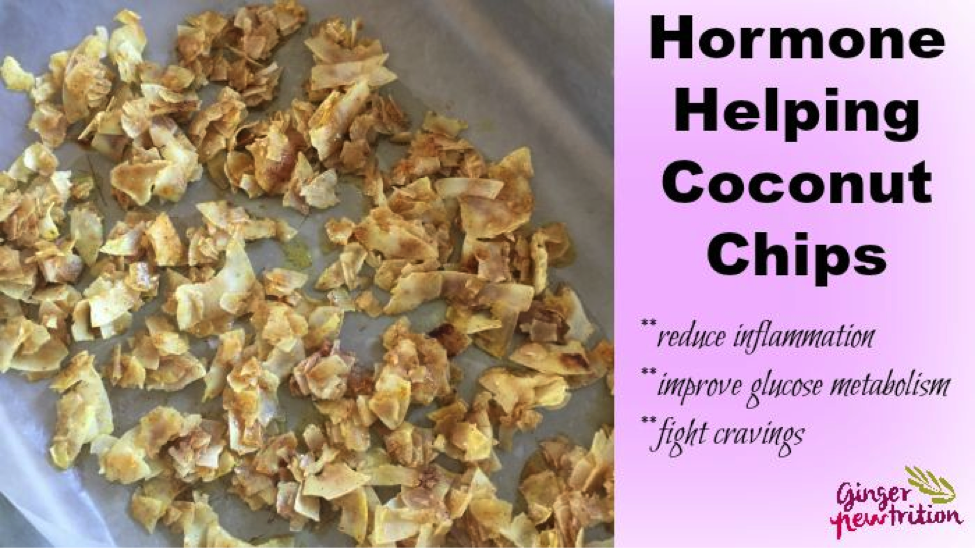
  • Hormone Helping Coconut Chips

    Hormone Helping Coconut Chips


    As Alex of Dig Primal and I have been working on the content for our Healthy Hormones Group Program for the last few months, my favorite part of the process is that I get to learn the tips and tricks that she uses too! We all have different tools that we pick up along the way and I think that it is important to have a really varied toolbox for my clients. Each person that I work with is so uniquely different in their bio-individual and genetic makeup that often a suggestion that works amazingly for one person will leave another feeling sick. A supplement that gives me energy though the roof might cause you to fall asleep at your desk. That is all a part of the puzzle!! I love learning lots of different options, recipes and suggestions so that we can find the perfect combination for each person.


    Alex shared this recipe with me for Hormone Helping Coconut Chips and I can’t get enough! I love incorporating coconut flakes into my diet for a lot of reasons. For one, they have an amazing composition of healthy fats, protein, and fiber. Not only does this combination of macronutrients help keep you full longer after meals (which also helps prevent unhealthy snacking you weren’t actually intending), but fueling your body with such balanced caloric intake is great for the hormonal system. Additionally, the fatty acids found in coconut products directly play a role in healthy hormone synthesis so their presence in the diet greatly increases the success of all your other hormone-helping interventions; after all, it makes sense that if you don’t have the building blocks to create hormones, no amount of adjunctive therapies are going to help your cause in the long term.


    The spices found in this recipe work through a variety of mechanisms to help the endocrine and adrenal system along. Since glucose metabolism is a huge problem in people with hypothalamic-pituitary-adrenal dysfunction (which is often simply referred to as “adrenal fatigue” but is actually an incredibly limited way to look at the problem since it encompasses so much more than the adrenals…no wonder people have a hard time treating it on their own!), the cayenne, turmeric, and cinnamon are in here to help with the proper use and balance of sugar in the body.


    As an added bonus, cayenne pepper and turmeric are incredibly effective in tempering the inflammatory response in the body due to stress, high glucose levels, and underlying hormonal imbalances (see how they all work off each other??), incorporating these spices into meals regularly can be really helpful.


    Ingredients:


    • 2 cups coconut flakes
    • ¼ teaspoon cayenne pepper
    • ¼ teaspoon ground turmeric
    • ½ teaspoon ground cinnamon
    • ½ teaspoon vanilla extract
    • 1 tablespoon ghee (replace with coconut oil if you can’t tolerate dairy products)
    • 5 tablespoons raw honey


    Steps:


    1. Preheat your oven to 300 degrees.
    2. Place your coconut flakes into a medium-sized mixing bowl.
    3. Add in the cayenne pepper, ground turmeric, and ground cinnamon to the coconut flakes and stir well so that all the spices are well distributed (trust me when I say that you do not want a big bite of cayenne pepper down the line).
    4. Place the tablespoon of ghee (or coconut oil) into a small bowl and microwave it until the ghee has melted.
    5. Add the honey and vanilla extract to your melted ghee and mix them all together.
    6. Slowly pour your honey, ghee, and vanilla extract mixture of the spice-dusted coconut flakes. Mix it all together until everything is evenly distributed.
    7. Line a baking sheet with wax paper and evenly spread your coconut flake mixture over the entire area. You don’t want big clumps so take a few moments to spread it all out over the entire baking sheet.
    8. Bake in the oven for 5-7 minutes.
    9. Take out and let cool.
    10. I stored mine in a glass tupperware container.


    Want to learn more fun and delicious recipes that can also help support your adrenal glands and balance hormone? The Healthy Hormones Group Program is starting Sept 15th!!!


    [image url=”http://gingernewtrition.com/wp-content/uploads/2015/08/Healthy-Hormones-Group-Program-Logo.png” raw=”true” alignment=”center” margin_left=”0″ margin_right=”0″ margin_top=”0″ margin_bottom=”0″ width=”244″ height=”103″]


  • Why Adrenal Fatigue is not just about the Adrenals

    Why Adrenal Fatigue is not just about the Adrenals


    When Hayley of Primal Palate recently posted a picture of her Adrenal Cocktail on Instagram a flurry of requests came to my inbox. What is this drink? Should I try this? What else can I do for adrenal fatigue? The popularity of such a post magnifies how real the struggle and how far reaching. I created this blog post as a guest post on Primal Palate but wanted to share here as well!


    [image url=”http://gingernewtrition.com/wp-content/uploads/2015/07/untitled-7758-800×533-300×200.jpg” raw=”true” alignment=”left” margin_left=”0″ margin_right=”20″ margin_top=”5″ margin_bottom=”5″ link=”http://www.primalpalate.com/paleo-blog/my-take-on-adrenal-fatigue-from-a-recovered-burnout-guest-post-by-megan-rand-of-ginger-newtrition/” target=”_parent” width=”300″ height=”200″]

    I know the struggle is real from first hand experience. I have been there. When I first tested my adrenal function, I was in was in the worst phase of adrenal dysfunction. My daily cortisol output had tanked to nearly nothing and my sex hormones were depleted as well. I know what it is like to have a 1 year old and feel like you don’t think you can muster up enough energy to brush your teeth!


    Let’s talk a little bit about the term adrenal fatigue.


    I was taught to use the term adrenal or hormonal dysfunction, since the idea of adrenal fatigue makes it sound like the adrenal glands are actually tired. In most cases the adrenal glands are not tired at all, but they just might not be receiving the correct message. Here is an analogy. The adrenal gland is a teenager sitting on the couch watching TV. The reason that the teenager is sedentary could possibly be because he is fatigued, but more likely than not, that is not the case at all. He just hasn’t received the message “ Hey, get up and get outside it is beautiful out there!”


    This is also what happens in our body, we have many complex systems, one of them being the Hypothalamus-Pituitary-Adrenal (HPA) axis. The hypothalamus (in the brain) is supposed to tell the pituitary to alert the adrenals that it is time to make cortisol (or other stress mediators). It is like they are a bunch of 6 year olds playing telephone and sometimes there is s a breakdown in the chain. The adrenals may not end up getting the message or get the wrong message. You want a hot cross bun? No, I said I want to go for a RUN!


    Seems crazy that a game of telephone in the body could be regulating all the crucial tasks of digestion, energy, sex drive and immune function, but it is true. In our high stress world the inputs are coming into the hypothalamus at rapid speed, all while environmental toxics and endocrine disruptors and pumping through the body just to add a few more obstacles. It is not surprising that the signals get crossed.


    So what happens when the signals get crossed? Well, a whole slew of symptoms can occur. You can read the list of signs & symptoms here.


    Why I was excited to find out that I had severe adrenal dysfunction?


    Seeing my functional lab work that showed I was barely producing any cortisol, very little estrogen, progesterone and melatonin was the first time that my results on paper lined up with my symptoms. Up until this point, I had been to multiple doctors complaining of my vague but annoying symptoms. I was tired all the time, lightheaded, constantly sick and just basically miserable.


    My first relief upon seeing my lab work was soon followed by more questions.   I realized that although I had found an imbalance and yes it was causing these symptoms, I still didn’t know why I had imbalances.


    Maybe you suspect adrenal dysfunction, or even better if you have done a salivary cortisol and hormone test and know that you are either producing way too much cortisol (tired and wired) or have ended up in a state of low cortisol (downright exhausted). Or maybe your test showed that you have an inappropriate level (high or low) of hormones such as estrogen, progesterone and testosterone. What’s next?


    What to do if you suspect Adrenal Dysfunction


    • Check the numbers – I am a girl who likes to see my progress on paper and have the data and numbers to work with. The Biohealth 205 Adrenal/Cortisol panel is going to be a part of the Group Adrenal Program that Alex of Dig Primal and I will be offering in the Fall. This is an opportunity to see your hormone levels and then learn how to correct any imbalances found. Otherwise you can visit a Functional Medicine Doctor, Naturopath or Functional Diagnostic Nutrition Practitioner to get a salivary cortisol and hormone panel or another good option is a urine test (DUTCH). Choose a lab that includes cortisol, DHEA, progesterone, estradiol, estriol, testosterone and melatonin.


    • Start with the basics – I think we often (myself included) really want to find that one genetic defect that is the root of all of our misery. We look around and see the neighbors chowing down on McDonalds and they seem to feel great. We work hard to stay away from toxins, follow a strict paleo diet and eat 3 cups of greens a day. It just doesn’t seem fair that we still have health problems, so there must be ONE THING that we are missing. Although genetics of course play a role, don’t bother going down that rabbit hole until you have covered all of the basics.


    Do you have good Stress Management techniques? Are you getting adequate sleep, ideally going to bed a couple of hours before midnight? Are you hydrated and is your water from a good source (void of the metals, bacteria & fluoride but still has the minerals that your body is craving?) Are you exercising enough or are you over training?


    • Don’t stop at the adrenals – yes adaptogenic herbs and licorice root tea might be helpful, but use these tools to get some relief and then you can dig deeper to really correct and restore the imbalance from the root cause. You can read more about the steps I take with my clients in this


     Find your food sensitivities – Undiagnosed food allergies or sensitivities can raise cortisol histamine levels in the body, thereby taxing the endocrine system. Be a detective and make sure you are aware of your allergies and intolerances. Join the group detox program if you need help following an elimination program.

    Gut dysfunction – Just as Hippocrates said “all disease begins in the gut”. Whether you have traditional digestive symptoms or not, this is still an area of utmost importance to explore on your journey to balanced hormones. Just think about the dysfunction that will occur in the body if you are not able to absorb or assimilate the food that you are eating and therefore cannot turn those building blocks into hormones?

    Liver health – Often we need to cleanse the liver in order to get hormones working again. The liver has over 500 jobs, and keeping the hormones happy is one of them.

    Thyroid health – This is a great place to start with your physician and another important piece of the puzzle.

    Heavy metals – Do you have a mouthful of metal fillings? Heavy metals toxicity is one of the known causes of intestinal permeability (leaky gut) and also puts a burden on the liver.

    Parasite, bacteria, fungus – Make sure to look for possible pathogenic infections that may be depleting your nutrients, taxing you liver or raising your cortisol.


    So What Can I Do?


    I love to use food as medicine as much as possible to help balance hormones. While we make an effort to minimize the stress in our life, we can also help support our body with the best nutrients available.


    5 Tips for Healthy Hormones

    [image url=”http://gingernewtrition.com/wp-content/uploads/2015/06/Ginger-Newtrition-Good-Fats-300×209.jpg” raw=”true” alignment=”left” margin_left=”0″ margin_right=”10″ margin_top=”0″ margin_bottom=”0″ width=”300″ height=”209″]

    • Eat lots of good fat – We need dietary fats in order to make hormones! Make sure each meal has a healthy fat such as avocado, fish, nuts, coconut oil, avocado oil, olive oil, grass-fed butter (if you tolerate dairy), ghee (clarified butter), duck fat and tallow for ex.


    • Add some salt; Pink Himalayan Sea Salt – I put this on everything. Himalayan pink salt has 84 essential minerals that the adrenals need to function properly (very different from iodized table salt which can be harmful). You can even try sprinkling some in your water to see if it tastes better!


    • Don’t forget your Vitamin C – Healthy adrenal function requires vitamin C. Tissues in the body use more vitamin C during times of stress. Vitamin C is found naturally in a lot of foods such as citrus fruits, leafy greens, tomatoes, sprouts, kiwi, papaya, red pepper, and cauliflower. One teaspoon of Camu Camu powder added to a smoothie has the same amount of vitamin C as eating 6 oranges, so this is a good option for those of us who really need a boost!

    [image url=”http://gingernewtrition.com/wp-content/uploads/2014/06/Ginger-Newtrition-Gut-Healing-Chicken-Bone-Broth-700×394.png” raw=”true” alignment=”left” margin_left=”0″ margin_right=”10″ margin_top=”0″ margin_bottom=”10″ width=”350″ height=”196″]

    • Daily Bone broth – You knew this on was coming right? Bone broth made from organic raw chicken or beef bones (all of the bones!) that is cooked over a 24-hour period helps with gut repair, has highly absorbable forms of calcium, magnesium, potassium, phosphorus and sulfur and is an easily digestible protein. I add a Tbsp. of coconut oil, Tbsp. of collagen and pink salt to my mug and this becomes the perfect food for someone with adrenal dysfunction to maximize the nutrients with minimum effort.


    • Be aware of magnesium deficiency – Magnesium deficiency is incredibly common, some studies estimate 75% of Americans are deficient. Magnesium is important for stable energy, so this small change alone can have a big impact on those who are deficient. One way to increase your magnesium intake is by adding 2-4 ounces of Magnesium oil or 1 cup Epsom salts to a bath and soak before bed. The same thing can be accomplished with a foot bath while you read a book or watch TV. It is a great way to help your body relax while you are also absorbing your way to feeling better!


    • Adrenal Cocktail – This Orange Juice creamsicle offers a boost in energy and helps regulate blood sugar. This is great for those of you who are feeling pretty depleted and have low cortisol levels.


     The most important change that I see clients make in order to restore hormonal balance is a mindset change. When you discover that your fast-paced lifestyle is depleting your vital reserve it is time to reconsider your priorities. What activities or people are recharging you and which of those are stealing all of your energy? Can anything be re-arranged in your schedule or life to minimize the things that are depleting you?


    I hope this helps!! I would love any feedback on what else has worked for you.


    NEXT GROUP PROGRAM STARTING SEPTEMBER !


    [image url=”http://gingernewtrition.com/wp-content/uploads/2015/06/Ginger-Newtrition-Group-Coaching-Program-860×344.png” raw=”true” alignment=”center” margin_left=”0″ margin_right=”0″ margin_top=”0″ margin_bottom=”0″ width=”860″ height=”344″]

    Want to look at your hormone and neurotransmitter labs and have a group for support? Alex of Dig Primal and I are going to be offering a 3 month group program starting September 15th. You will have receive a customized protocol but all of the coaching will be done in group. Put your name on the Adrenal Fatigue Group Program update list for more information.

  • The BEST Guilt-Free Honey Sweetened Chocolate

    The BEST Guilt-Free Honey Sweetened Chocolate


    I am not a stalker usually… but last week I was.


    I overheard a mom with three children explaining to someone else at Whole Foods that she makes her own yogurt and her children follow a pretty strict Paleo diet. As she was speaking, one of the children was asking “mom does this have corn in it?”


    We needed to be friends.


    As a health coach mom with a child who is gluten free, dairy free, soy free, corn free and junk free, sometimes our restrictions can be alienating. Meeting another family able to keep up with the lifestyle with THREE kids… I was impressed to say the least.


    As we walked away I whispered to my daughter “Lily, those kids eat like you do!” She quickly turned and said “I want to meet them!!”


    The good news is that when you become a mom, stalking someone in a grocery store because your daughter wants to meet them is a little more acceptable than without children.


    I am very glad that we were stalkers that day because as it turns out Julie was one of the founders of Pure 7 Chocolates and I have fallen in love with their chocolate and their story.


    After visiting Julie & Carrie, the co-owners of Pure 7 Chocolates in their local kitchen I asked if I could interview them to share their story. Check it out!


    Q:  As 2 busy moms, what prompted you to want to start your own chocolate company?


    A:  When we first started our company together, we had 7 children ages 8 and under.  Our youngest were still toddlers so it was a very busy and crazy time to start any new project, let alone a start-up company.  But, we are both driven to feed our families healthy and nourishing food and we saw a need in the market (and in our families) for a healthy chocolate.


    Q: Why not just eat the healthy chocolate already out there?


    We needed a chocolate that was honey sweetened with no additives or fillers.

    When Julie’s son was diagnosed with autism she went through many different iterations of a healthy diet to support her son. A gluten free, dairy free diet showed huge improvements but she soon realized they were still addicted to the Standard American Diet (SAD) just without the gluten and dairy.

    The SCD diet came next with even better results as his eye contact and presence returned. After about 6 months they switched to the GAPS diet and this made the most drastic difference!  Julie’s son & daughter both stopped stimming after 2 weeks on the diet.  They stayed on the GAPS diet and followed the stages with a GAPS practitioner for 2 years.  They currently follow a Paleo type diet now.

    (For more details about their journey and GAPS you can read Julie’s blog here)

    Although they were able to follow their plan consistently, they missed CHOCOLATE!  Chocolate is allowed on the full GAPS diet but nobody was making a GAPS legal chocolate and Julie was a strict follower of the diet.  All the chocolate at the stores were filled with sugars, fillers and artificial flavors!

    That is why we started making Pure7 Chocolate!

    [image url=”http://gingernewtrition.com/wp-content/uploads/2014/12/Ginger-Newtrition-chocolate-almond.png” raw=”true” alignment=”left” margin_left=”0″ margin_right=”10″ margin_top=”0″ margin_bottom=”0″ link=”http://www.pure7chocolate.com” target=”_parent” width=”300″ height=”300″]

    Q:  What was the biggest hurdle or hardest part about starting your own business.


    A:  Everything was hard in the beginning.  We first had to figure out how to make honey sweetened chocolate which we were told over and over could not be done.  It literally took us a year of research and experimentation in the kitchen until we finally figured out the exact recipe and how to temper honey-sweetened chocolate.  Once we had a product, we had to figure out all of the other details of starting a business from the ground up.  We just networked and took notes and relied on advice from people who were in start-up food businesses.

    If you have a product that you love and you can stand behind 100%, I think people can see that and success happens organically.


    Q:  What makes your chocolate so awesome?


    A: We make handcrafted Raw, Organic & Fair Trade honey-sweetened chocolate. Our bars are unprocessed, unrefined and free of chemicals, dairy, soy, gluten and refined sugars.  Just Pure!

    Because our bars are sweetened with honey, the texture is smooth and creamy…almost like a milk chocolate in its texture.  Our bars are all 85-87% cacao…but because they are sweetened with honey, they are not bitter like a lot of other dark chocolate.

    Pure7 Chocolate has been a HUGE hit for the Paleo, GF, DF, SF & raw diets!

    We believe PURE ingredients are naturally nutritious and simply taste better.  That’s why we are committed to hand making our bars in small batches without the use of chemicals, dairy, soy, gluten and refined sugars.


    Q:  Where can we find your product?


    A:  We are in gourmet/specialty stores in New England and New York City as well as Whole Foods in New England but you can also purchase our chocolate online.  We are expanding quickly so for a list of all of our most up-to-date locations, check out our website at www.pure7chocolate.com.


    This is what I hope you take away from this post:

    • If you have children and are struggling with getting them the best food for their situation, know that you are not alone. Keep it up and know that you will be setting them up for a lifetime of health.
    • If you see a need for a product in the market that can help families live healthier, happier lives… go for it!!
    • Go get some chocolate!! This stuff is delicious and supports fabulous people! pure7chocolate.com


    Are you following us on Instagram? Check us out: gingernewtrition.   We are doing a giveaway soon of this fabulous chocolate.  I don’t know about you, but I would hate to miss free chocolate!!


  • Easy Slow Cooker Chicken Bone Broth

    Easy Slow Cooker Chicken Bone Broth

    3 to 4 pounds of chicken bones and cartilage (ideally ALL of the chicken such as feet, neck etc) or a whole chicken

    1 to 2 large carrots, roughly chopped

    2 large celery ribs, roughly chopped

    1 large onion, roughly chopped

    2 bay leaves and spices of your choice

    2 tablespoons raw apple cider vinegar

    Filtered water

    Salt and pepper to taste after cooking


    Add vegetables and bones (or a whole chicken) to a crockpot. Add vegetables and bay leaves. Feel free to add other spices of your choice. Fill the crockpot with filtered water until it covers the chicken bones or the whole chicken. Add 2 tablespoons raw apple cider vinegar.


    Cook on low for at least 24 to 40 hours


    Store your broth. Strain bones, vegetables, and spices from your broth. Store it in glass mason jars.


    Using  apple cider vinegar and cooking over a 24 hour period helps to draw the minerals out of the bones. What is left is an amazing food to help boost immunity as well as a helping aid for people who are having issues with intestinal permeability or leaky gut.   Just like grandma always said, chicken soup is the way to go!


    You can use as the base of a soup, use instead of water to make rice, or just drink a mug daily like you would tea (add Tbsp coconut oil or ghee & sea salt for additional gut healing benefits).


    NOTE: If using a whole chicken, boil the chicken until the meat is cooked, then remove the meat and allow the bones to simmer for another 12 or so hours. Use the shredded chicken to add to a soup, salad, or any of your other meals.

  • 6 Ways Juicing Can Help You Lose Weight

    6 Ways Juicing Can Help You Lose Weight

    Juicing is all the rage lately!  There is a juice bar on every corner and $8 cold pressed green juices are flying off the shelf.  Is this a silly fad?  Why not just eat the fruits and vegetables?   Juicing provides a high level of quality nutrition that many people may not be able to otherwise absorb. By bypassing the need for stellar digestion (which is uncommon nowadays!), we can help build our vitamin and minerals stores. Having optimum nutrient levels will naturally assist in weight-loss.   Read on to find out how adding in a juice can help you slim down.

    1) Easy Digestion

    One of the best benefits of juicing fresh fruit and vegetables is that drinking them (as opposed to eating them) makes them really easy for your body to digest.  Many of my clients find through functional lab work that they have “leaky gut” or intestinal permeability.  With a compromised GI tract, it can be hard to digest and absorb the same amount of raw vegetables found in a juice. But by juicing those vegetables, you can absorb a dense quantity of vitamins, minerals, and nutrients really easily.

     2) Reduction in Cravings

    When you drink a glass of freshly made vegetable or green juice, you are loading every cell of your body with detoxifying minerals. By drinking your veggies and fruit, you are giving your body all the amazing nutrients that it needs to heal, stay healthy, and reduce the risk of illness. In turn, you will also find that you experience a reduction in cravings, particularly for sweets or processed foods. Often when we eat junk foods, we confuse the body.  After eating, a message is sent to the brain announcing that it is still needing certain minerals and vitamin causing cravings.  After drinking a nutrient dense juice your body is getting all that it needs and has no need to signal the brain. And it is pretty obvious how not having cravings can help someone losing weight.

    3) Tasty Fuel

    It is also handy to know that green juices taste great! You can make your juice really flavorful by adding in lemon, mint or ginger to add a tasty punch. You may enjoy the flavors of the juice so much that you choose to make a juice rather than eat another less healthy snack food. It is also worth noting that juice you make at home is a much better option than that which is store bought. Fresh juice made with a base of vegetables is going to contain much more nutrition than the kind that comes from a carton. Even fresh, store-bought juices often have sugars and other additives as well as preservatives added to the juice. On the other hand, a homemade vegetable and fruit juice delivers nothing but goodness that is healthy fuel for your body.

    4) Crowding out

    This is a principle we learned at the Institute of Integrative Nutrition and is my favorite approach to weight loss.  By adding fresh juices into your daily regimen as either a snack or a meal, you are crowding out the junk that you would have otherwise eaten.  Instead of focusing on what you cannot have which leaves people feeling deprived and just wanting that forbidden junk even more, we focus on adding in the good.  Over time you start to realize that your body chemistry has shifted and you don’t reach for the junk food as often.

    5) It is not a fad diet

    Once you start making juicing a regular part of your lifestyle, and start to experience all the health benefits and begin losing weight without a struggle, you will realize that incorporating fresh juices into your life is definitely not a diet fad. Unlike regimented diets that are difficult to follow and which can often make you gain weight, juicing works in such a remarkable way that you will want to include juicing in your life forever. You will never feel deprived or hungry. Not only that, but other aspects of your health will also improve. You might notice your skin is clearer, your eyes are brighter, and your nails and hair grow more quickly. You will also have more energy and you will start to feel amazing. Juicing will become a way of life you will want to follow forever!

     6) Fun and Variety

    In order to lose weight and to stay motivated, life needs to be fun, right? Juicing is the ideal way to bring this into your life. As you start to get into juicing, you will find it great fun making new combinations of fruit and vegetables cocktails. You will make all kinds of unique and interesting drinks, and you will find that you never get bored from the endless variety of beverages that you can make for yourself and others. You will also want to share these drinks with others, which will mean getting encouragement and support from those around you as you continue your weight-loss goals. Support is extremely important when it comes to making, and sticking to, healthy changes in your life.   Really, juicing is a fabulously fun, easy, and healthy way to shed those unwanted pounds without any struggle or deprivation. You have nothing to lose by starting to make green juicing a regular part of your lifestyle. To get you started, here is a delicious and easy juice to kick-start your weight-loss:

    Green Ginger Juice

    4 carrots

    2 apples

    1 cucumber

    ½ beetroot (peeled)

    1 rib celery

    1 lemon

    1-inch piece of ginger (or more!)

    Run the vegetables through your juicer and enjoy!

  • 5 Cheap At-Home Health Tests That Don’t Require A Doctor

    5 Cheap At-Home Health Tests That Don’t Require A Doctor

    Have you been searching for a reason that things aren’t quite right or wondering why those annoying symptoms keep popping up? Or do you feel great but are curious how you are doing on the inside? These 5 tests are a great place to start as you search for clues and gather information. The cost of functional lab work that we use to check hormones, detoxification, intestinal permeability (leaky gut) and food sensitivities can cost a lot of money! Although they are often needed, why not start with the basics? Read on to find out how to use these cheap (or free) tests in the comfort of your home. Great tools for monitoring your own progress!

    To test at home: Blood Sugar Levels

    Did you know that balanced blood sugar is the common attribute of people who live to be over 100? Keeping blood sugar from fluctuating is extremely important to health and longevity. Monitoring your levels can give insight into how your body reacts to the foods you eat.

    1)   Buy an inexpensive glucometer. Glucometers can be really expensive and the strips can be even more expensive (I pay $1.00 per test strip since I didn’t have this handy information before!). Amazon has the Tru 2 Go for only $13.25 and the test strips that go with this are $17.50/100 (17.5 cents ea).

    2)   For 7 days – test your blood sugar first thing in the morning before having any food (ideally 12 hours since your last meal) for your fasting blood sugar level. An ideal level is less than 86 mg/dL. Although this is not the number that is considered “normal” at the doctor’s office, this study shows that a person with a fasting glucose level of 90-94 has 49% greater risk of developing diabetes compared with a level less than 85. While testing, I highly suggest that you keep a detailed food journal to watch the patterns. For my more advanced testers you can check blood sugar levels 1,2 & 3 hours after a meal to see how you are reacting to a food. If you want more information about this topic Chris Kresser has an awesome article Why your “normal” blood sugar isn’t normal (Part 2).

    To test at home: Food Sensitivities

    An elimination diet is a good test to find out if you have a food sensitivity. According to Dr. Mercola, food and chemical sensitivities are estimated to affect up to 50% of Americans. Sensitivities are much harder to pinpoint than a true food allergy, because sensitivities cause a slower and more subtle response. The top 5 Food sensitivities are corn, soy, gluten, dairy and eggs. But, your sensitivity could be to any food. If your gastro-intestinal tract is compromised or has been under attack for a long time, you might have devolved sensitivities to many foods. To test: Remove most common food sensitivies corn, soy, gluten, dairy, eggs, nuts, and processed foods, alcohol, sugar and anything else that you suspect might cause a problem (I also have my clients remove most beans & grains since this can be hard on digestion for many people) for 2 weeks. Add one new food back in every 2 days and watch for any reaction. Reactions can include digestive problems, skin issues, headaches, or low mood and energy.  A food journal of mood as well as physical symptoms is imperative in this process.

    To test at home: pH

    An Acid-Alkaline balance in the body is an important factor for your health.   Just as we know it is important to keep your pool at a certain pH or funky things will grow, this is the same within your body. Cancer thrives in and acidic environment but cannot survive in an alkaline environment. Maintaining a proper pH will help the body be able to detoxify and will increase our immunity.

    6 days in a row

    1)     Buy pH strips from your local drug store or health food store in the supplement section

    2)     Upon waking (before eating or drinking anything) put one strip in your mouth to test your saliva

    Should be 6.8 to 7.2

    3)     Test 1st urine between 5 am and 8 am – this should be more acidic because during the first 4 hours of sleep your body removes acid from the joints.

    4)     Test 2nd urine (before eating if possible) – This is the most important reading to give you a good baseline of where you are for the day

    Should be 6.8 to 7.2

    To test at home: Candida

    6 days in a row

    Spit in a glass of water 1st thing in the morning when you wake up before eating, drinking or brushing your teeth. Check the glass over 45 minutes. If after 45 minutes your spit is floating on the top, you are good to go. If the spit has formed legs and traveling down, we need to work on your balance. If the spit has completely dropped to the bottom, then candida is planning a major takeover and we need to take care of the candida to improve your health.  

    To test at home: Thyroid Health

    3 days in a row

    Take your temperature first thing in the morning when you wake up. Put your thermometer under your armpit and then get back into bed for 10 minutes. You can also take your temperature before you go to bed and 20 minutes after each meal. If you are consistently under 97.4 then you might have a sluggish thyroid.

  • Signs Your Adrenals and Cortisol Aren’t Helping your Athletic Performance

    Signs Your Adrenals and Cortisol Aren’t Helping your Athletic Performance

    I was on my way to becoming a professional marathon runner when all of a sudden I got knocked off course by my out-of-whack hormones.


    Okay, so maybe I wasn’t exactly a professional, but I ran my first marathon in Honolulu in 2009 and finished without dying!! I think that is pretty professional, and it makes for a much better story than the truth; I was a recreational runner who ran a few races, got the itch to run faster, train harder, do speed workouts, and increase the long runs but ended up dizzy and dehydrated with a painful IT band, low cortisol and imbalanced hormones instead.


    Is anyone else in this boat? A lot of us are, but if you are thinking, “Not me, I am in my prime!” then this is the perfect time for you to get ahead of the game. You can find any small imbalances and restore balance before you would have suspected they might be there.


    Many of the practitioners in the holistic health field spend a lot of time trying to help other people avoid making the same mistakes that they made, and I am here to do the same. Symptoms are the last thing to occur as a sign of imbalance. This means that we may have lost 30% of our optimal function before our body gives us a sign! Using functional lab work, we can find and correct this imbalance at its earliest stages.


    For an athlete, this is exciting. This is a chance to make sure we are getting the best possible performance out of our body, maximizing our potential and endurance, while also fending off the potential for burn-out.


    Top signs your body is sending you that your adrenals might be struggling include:


    1)   Brain Fog – Did I take my vitamins today? I think I did, but I am not sure. Sound familiar? Or maybe you can’t remember  🙂


    2)   Slow recovery from exercise – I used to think it was normal to have a headache and need a nap an hour after a hard workout. If you are still trying to recover from a workout more than 30 minutes later, then your adrenal glands might be struggling.


    3)   Up and down energy and mood swings – Sleeping at your desk in the afternoon is a true sign of adrenal dysfunction. You might tell yourself that it is only because you had a hard workout that morning, but often it carries over to days that you don’t work out. Ideally, our cortisol level is highest in the morning, which gives us enough energy to get up and go, and be able to keep up for the rest of the day.


    4)   Carb and sugar cravings – Hitting up the vending machine or taking a quick trip to Starbucks no matter how many times you tell yourself you will quit tomorrow. When our cortisol output is low due to chronic stress of all kinds, we turn to carbs and sugar for quick energy.


    5)   Loss of libido – Although we are talking about athletic performance, performance could be lacking in other areas as well. When all of our hormonal resources are used for cortisol, the stress hormone, our sex hormones are often depleted.


    6)   Trouble sleeping – ‘Tired but wired’ is a classic sign of adrenal dysfunction. Ever feel so exhausted but once lying in bed you can’t seem to sleep because your monkey mind starts jumping from one crazy thought to the next? Or do you feel like you are tired all day and then get a second wind around 8 or 9 pm? Elevated nighttime cortisol, when it is supposed to be going down so that you can sleep, is a really common finding with my clients.


    7)  More allergies and sensitivies – You never used to have a problem with hay fever or gluten but now you do. Instead of just blaming this on the seasons or your new dog, consider this a warning sign from your body.


    8)  Digestive issues – When your body is in a state of stress, the fight-or-flight reaction kicks in and digestion takes a back seat to survival. This is great for the occasional life-threatening chase by a bear, or when you are about to win the Boston Marathon, but not so great when this is your day-to-day life. For runners with digestive issues, we know how horrible (and embarrassing) this can be.


    9)   Weak immune system – Chronic infections are the name of the game for people with adrenal fatigue, and include bacterial, viral, fungal, yeast. I was in the “best physical shape of my life” yet came down with shingles at age 28 during my marathon training. Don’t ignore the signs that your body is giving you.


    10)  Training harder with little improvement in muscle tone – Making gains quickly in beginning, but then plateauing or getting worse, is a dreaded situation for an athlete. DHEA and testosterone are important for muscle building. Most of my client’s have very low DHEA and testosterone since the master hormone pregnenalone has been consumed by the constant need for cortisol.


    11)   Injuries – For me , it was IT band issues. The dreaded pain in your knee when you are 10 miles out on a 20 mile run! Although an injury might seem completely unrelated to your hormones, the more injuries stacking up, the more we suggest you get those levels checked.


    Wondering how to get your hormone levels checked? It is quite simple, and there is no need to drive to a lab or get an appointment with your doctor. As a part of my 4 month program I will send you an easy at-home test that requires you to spit into four vials during the day. All you do is seal them up, put them in the self-addressed return package, and drop them off at FedEx. In 2-3 weeks, when I receive the lab results we will discuss how well your lovely hormones are doing and help to balance anything that has gone astray!


  • Top Ten Tips for a Tired Mama

    Top Ten Tips for a Tired Mama


    Two years ago I didn’t have the energy to brush my teeth. I would lie in bed before work thinking about what body part I could break that wouldn’t be that painful but would keep me out of work for a few weeks? Yes, I was THAT tired. I was in phase 3 adrenal fatigue. There is no phase 4.


    Two years later, things are quite different. I am able to juggle a full-time corporate job (although not for much longer!), build my own health coaching business, attend courses for continuous education and keep delicious, nutritious food in the house all while running after a 3 year old.


    Don’t get me wrong, my health is always a work in progress, but the difference between 2 years ago and today is night and day.


    As you can guess, one of the most common questions I get asked is this “What did you do to restore your adrenals and your energy?” Here are my top ten tips for the busy person or mom who suspects adrenal fatigue or hormonal imbalance.


    1) Start with the numbers. Get your hormone & cortisol levels checked with a Functional Medicine Doctor or a Functional Diagnostic Nutrition (FDN) practitioner like me. We use a saliva test with samples taken at four times during the day. This provides a baseline of the state of your hormones and also gives clues into what other areas need investigating. An individualized supplement protocol based on your lab work can offer support and improve energy while we are digging to find the root cause of your adrenal fatigue. Sometimes we need a little boost before we can make lasting changes in diet and lifestyle.


    2) Blood sugar balance is key. This was incredibly important for my shift in energy. I learned that when you eat is just as important as what you eat. One study looked at the fasting blood sugar levels of nearly 2,000 men, over a 22-year period. Men with fasting glucose levels over 85 mg/dL had a 40 percent increased risk of death from cardiovascular disease. The same study indicated that with fasting blood sugar between 85-90mg/dL, there is a 20 percent increased risk of dying of a stroke or heart attack; from 90-95mg/dL there is another 20 percent risk of dying of a stroke or heart attack. (1)

    • When to eat. This is the most important factor when trying to maintain blood sugar balance. For busy mamas who get up and go, you MUST eat breakfast. I know, I know. How many times have we heard that this is the most important meal of the day? But it is true! Eating within 30-60 minutes of waking will set you up for a balanced day. Establish a route of preparing all of your smoothie supplies the night before, or make an egg burrito ahead of time and heat it in the toaster oven.
    • What to eat. For every meal and snack, include a carbohydrate, protein and fat. All carbs are not created equal when it comes to blood sugar regulation. Complex carbs such as quinoa, brown rice and sweet potato are ideal. After eating a half of a sweet potato every day at lunch with cinnamon and coconut oil, my blood glucose numbers stabilized.
    • Test your blood sugar.  Consider buying a glucometer at the drug store. Take your blood sugar first thing in the morning and then thirty minutes before each meal for a week. This will give you an idea of exactly how you are reacting to what you are eating.


    3) Drink water with minerals. Are you constantly thirsty but then when you drink water it doesn’t seem to quench your thirst? This is really common for those with adrenal fatigue. Making sure you are getting enough water is important, but the quality of the water is just as important for adrenal health. Our body is craving the minerals that are naturally in spring water. Since nowadays it has become necessary to filter our water, the good stuff gets filtered out with the bad. We drink a tall glass of water and our body is thinking “where the heck are the minerals that I asked for?” My suggestion is to buy spring water if you can. If you cannot, then you can add the minerals back in with a product like Concentrace Trace Mineral drops.


    4) Sea salt on everything! Salt is bad right? Not anymore! I remember when my nutritionist told me to put as much Pink Himalayan salt as I could stand on all of my food. Sure! Sea salt is packed with minerals that support the adrenals and it is delicious.


    5) Chicken Bone Broth just like Grandma said. Christa at The Whole Journey taught me that daily bone broth with help someone recover from adrenal fatigue 30 percent faster! I don’t know how I would measure that 30 percent, but bone broth was an important part of my protocol. Bone broth made from organic raw chicken bones (all of the bones!) that is cooked over a 24-hour period helps with gut repair, has highly absorbable forms of calcium, magnesium, potassium, phosphorus and sulfur and is an easily digestible protein. It’s the perfect food for someone in deep adrenal fatigue who needs the maximum nutrients with minimum effort.


    6) Don’t forget Vitamin C! Healthy adrenal function requires vitamin C. Tissues in the body use more vitamin C during times of stress. Vitamin C is found naturally in a lot of foods such as citrus fruits, leafy greens, tomatoes, sprouts, kiwi, papaya, red pepper, and cauliflower. One teaspoon of Camu Camu powder added to a smoothie has the same amount of vitamin C as eating 6 oranges, so this is a good option for those of us who really need a boost!


    7) Magnesium is essential. Magnesium was really important for my journey out of zombie-land. I would add 2-4 ounces of Magnesium oil, 1 cup Epsom salts and lavender in a bath and soak most evenings. The same thing can be accomplished with a foot bath while you read a book or watch TV. It is a great way to help your body relax while you are also absorbing your way to feeling better!


    8) Sleep! Maybe this should have been #1, because this is very important. Every hour of sleep that you get before midnight is like 2 hours in terms of rest and recovery for the adrenal glands. Aim to be in bed by 10pm every night. Don’t forget that the lights from the TV or electronic devices stimulate the pineal gland and can throw off your sleep cycle. I ask my clients to avoid all screen time after 8pm.


    9) Less Stress, more massages. As a mom, we sometimes feel that we have to do everything. Create a list of all of the top activities that drain your energy. Brainstorm which of these activities are critical and which could be put on the back burner or delegated. This might sound silly or simple, but this is crucial! We must give ourselves the space and energy for recovery if we want to be able to restore balance.


    10) Minimize alcohol & caffeine. Do you wish you had an intravenous drip of caffeine every morning but instead settle for multiple cups of coffee? Although VERY common, heavy use of alcohol and caffeine is very stressful to the adrenals. They give us a quick fix that leaves us ultimately in a more depleted state, causing us to need even more the next time around. This is a very rough cycle.

    If you are heavy coffee drinker, start by switching to organic and try to get yourself down to only 1 cup. Always make sure to eat you breakfast first. If you really love the morning ritual of coffee, you could try something like Teechino, an herbal coffee alternative or green tea.


    Note: In addition to the above recommendations, the basis of all of my programs to restore hormonal balance starts with eating whole foods while minimizing refined packaged foods, additives, chemicals, toxins, alcohol and caffeine.


    Disclaimer: Please see your Doctor to rule out any serious conditions. This information is not meant to diagnose or treat disease, but is just what I have personally found to work well for me.


    References:

    1. Bjornholt JV, Erikssen G, Aaser E, et al. Fasting blood glucose: an underestimated risk factor for cardiovascular death. Results from a 22-year follow-up of healthy nondiabetic men. Diabetes Care. 1999 Jan;22(1):45-9.