Tag: health coach

  • How to Dry Skin Brush

    How to Dry Skin Brush


    This is one of the first and easiest additions that I have my clients and detoxers add to their daily routine. This also turns out to be one of their favorites!


    What is the largest organ in the human body and releases over a third of toxins in our body? That’s right! It is our skin. Dry skin brushing is an effective daily practice to help the body detox and remove these harmful toxins, not to mention it opens and unclogs our pores.


    Unlike our blood which gets pumped around the body by your heart, the lymphatic system counts on our movement to stay moving.  And guess what?  Many of us aren’t moving as much as we used to.  Who else is tied to a chair at a desk for the majority of the day? When we dry skin brush, we are massaging and helping our lymphatic system cleanse itself. We pull waste from the body as well as remove any lingering toxins from soap, environmental factors, lotions, deodorant, and other things to help improve skin health.


    The best part is that skin brushing should only take about 5 minutes per day, so it is easily fit into a busy lifestyle and has great benefits! I personally was able to completely remove the bumpy skin that lived on my thighs and the back of my arms after a month of consistently dry skin brushing. Some of the benefits include:

    • Exfoliation
    • Lymphatic system stimulation
    • Reduce or eliminate cellulite
    • Unclog pores
    • Invigorating; you may feel more energized after brushing


    Here are ten simple steps and tips for you to follow to help you get started with dry skin brushing:

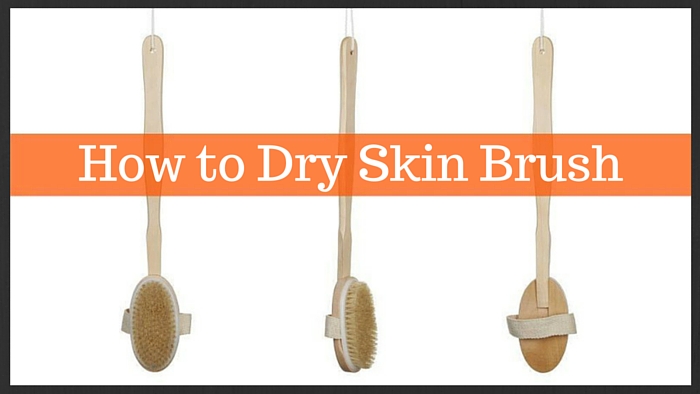
    1. Get a long-handled, non-synthetic bristle brush.
    2. Remove your clothes and stand in the bathtub or on a tiled surface. You will want to do this because you are scraping off dead skin, so you don’t want that to get on your carpet or your rugs.
    3. All of your brushing motions should be heart-centered, meaning you will want to have all the motions be moving towards your heart.
    4. Start at your feet and use long flowing motions, again, towards your heart.
    5. You will want to brush several times in the same area, overlapping your strokes as you continue.
    6. For sensitive skin areas, you will want to go easy. Your skin in those areas should become less sensitive with time.
    7. Once you have your whole body brushed, hop into the tub or shower. I find that the benefits of an Epsom salt bath are heightened after dry brushing.
    8. Alternating cold and hot temperatures help bring the blood back to the top of the skin.
    9. Continue this practice daily, but for best results, consider dry brushing twice a day; once in the morning and once before bed.
    10. Remember to clean your brush at least once per week with soap and water.


    Although this seems like a very simple daily detox tools, some detoxers report having detox reactions such as headaches just from dry skin brushing.  If you know that your liver and lymphatic system are burdened than start slowly.


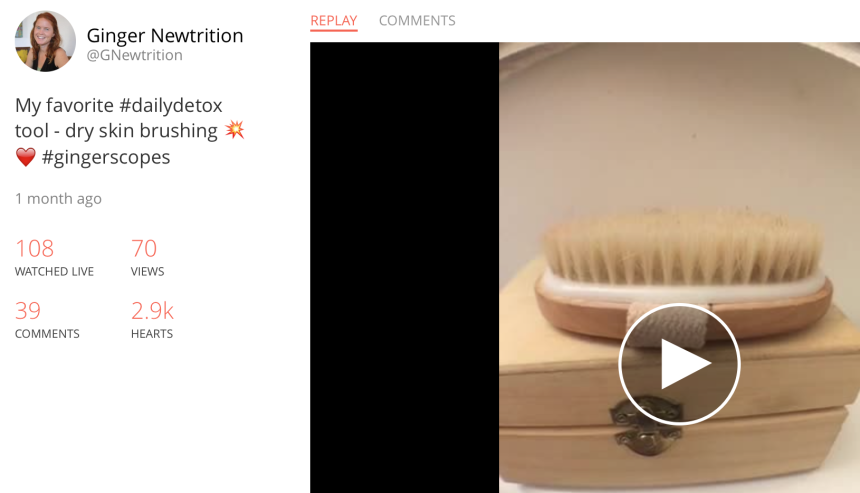
    Watch this periscope replay if you want more of a visual!

    Screen Shot 2015-10-02 at 9.36.44 AM

    Want to learn more of my favorite tips and have a group for support?  Join our next seasonal detox here!!


    What is your favorite daily detox tool?  Leave us a comment below!!


  • Your Brain and Stress; Neurotransmitter Basics

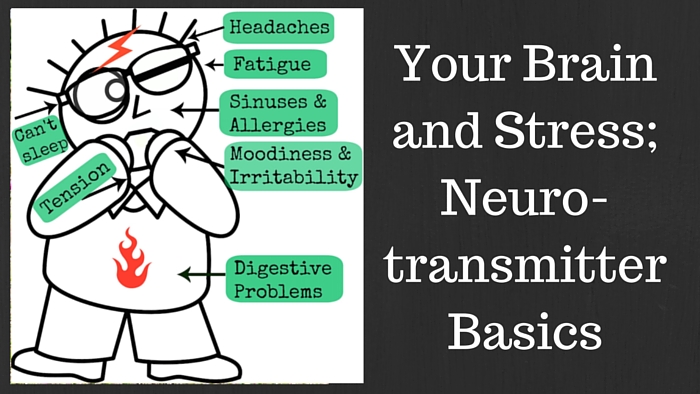
    Your Brain and Stress; Neurotransmitter Basics


    Many people are becoming aware of the term adrenal fatigue and are starting to suspect that this might be something they are dealing with. But this term can be misleading, because more often that not, it is not as simple as supporting the adrenals to have your fatigue, inflammation and hormonal imbalances disappear. The adrenals gland themselves are often working just fine, but the communication channels and feedback loops might have become disrupted. Neurotransmitters are chemical messengers that deliver important and vital messages from the brain and the adrenal gland. These tiny messengers help you respond to stressors and if they become imbalanced, all sorts of symptoms will start to pop up because the correct messages are not being sent. Once I started looking at a neurotransmitter panel in conjunction with an adrenal/hormone panel, I saw a big shift for my clients. The combination of their hormone and neurotransmitter results helps to put the puzzle together as to where the breakdown is in the chain.

    What happens with our neurotransmitters during stress?

    In time of acute stress or when you are in a constant chronic state of low stress (not just mental/emotional stress but also hidden internal stressors such as food sensitivities, bacterial overgrowth or heavy metal toxicity) neurotransmitters can become depleted. Just having a thought or being scared will alert your brain to alter hormone and neurotransmitter production in response. The neurotransmitters are a part of the stress response cascade. Think about how often we are bombarded with negative imagery and high stress situations in our fast-paced lifestyle. By looking at the levels of different neurotransmitters as well as their relationship to each other, such as the ratio between serotonin and dopamine or norepinephrine and epinephrine, we can see how well your body is adapting to stress.

    We have both excitatory and inhibitory neurotransmitters and some play both roles depending on the situation. Since our body likes to remain in balance, we also function optimally when our excitatory and inhibitory neurotransmitters are balanced. For example, stimulants such as caffeine push dopamine into the synapse and dopamine acts as an excitatory agent, which improves our focus. You know how you have your coffee and then feel pretty productive for a while? Feeling productive is great except there is a price we pay for that focus. Your body must now send in some inhibitory neurotransmitters to reign in the excitatory neurotransmitters. Serotonin and GABA come to the rescue. This is not necessarily a problem, because this is one of the ways that our amazing body stays balanced, but when we abuse ourselves daily by artificially forcing productivity with excess caffeine consumption, we eventually end up depleted in serotonin and GABA. Among many other functions serotonin is important for a stable mood and GABA is nature’s valium-like substance, you can see where we end up without these precious resources. You always have to ask… is this short-term benefit of being able to focus and have energy worth the long-term risk of an instable mood?

    Here is an example of the neurotransmitter testing results that the Healthy Hormones Group Program will have access to. These are just clues to get an idea of the bigger picture because your neurotransmitter levels will change throughout the day. Testing and then retesting after a period of time after trying a protocol or therapy will help us to understand how your body is reacting.

    [image url=”http://gingernewtrition.com/wp-content/uploads/2015/09/Screen-Shot-2015-09-02-at-1.46.39-PM1-860×664.png” raw=”true” alignment=”center” margin_left=”0″ margin_right=”0″ margin_top=”0″ margin_bottom=”0″ width=”860″ height=”664″]

    Here is a quick explanation of the neurotransmitters that we will be looking at during the next Healthy Hormones group program:

    Serotonin – This is considered the master neurotransmitter and helps to keep balance between the excitatory and inhibitory neurotransmitters. Adequate levels is necessary for a stable mood.

    Dopamine – Key player in reward-seeking type of behavior such as pleasure, satisfaction and focus. Dopamine also influences muscle control and gastrointestinal motility. Really low or high dopamine levels is correlated with memory issues.

    Norepinephrine– Important to the fight-or-flight response and also helps to make epinephrine.

    Epinephrine– Also known as adrenaline which we all know well. Epinephrine prepares the body for fight-or-flight by increasing your heart rate, blood pressure and respiratory rate so that you can run away or fight off the danger. This will also elevate your ACTH which raises your cortisol

    GABA– Nature’s valium-like substance which also helps regulate muscle tone.

    Glutamate– Important for memory and learning but can be damaging in excess leading to depression, seizures and damaging nervous tissue. This is often seen high for those with PTSD but you also have to watch that you are not accidentally consuming glutamate from MSG or DSG sources in food.

    Histamine – Helps to control sleep-wake cycle, energy production and memory recall. This reading on your lab is a window into inflammation and the higher the number the more mental fogginess, allergy symptoms and irritability you might be experiencing.


    If your neurotransmitters are all trending low in conjunction with low cortisol levels, than this is a sign you are in a chronic state of stress and are now in the tired and “burnt-out” phase.  At this point you will need a good amount of support to return to a healthy level.

    Ready to find out what is going on at a sub-clinical level before symptoms occur? Ready to get to the root of why you can’t seem to kick the anxiety or get your energy back? Come join us for the Healthy Hormones Group Program!!

  • Hormone Helping Coconut Chips

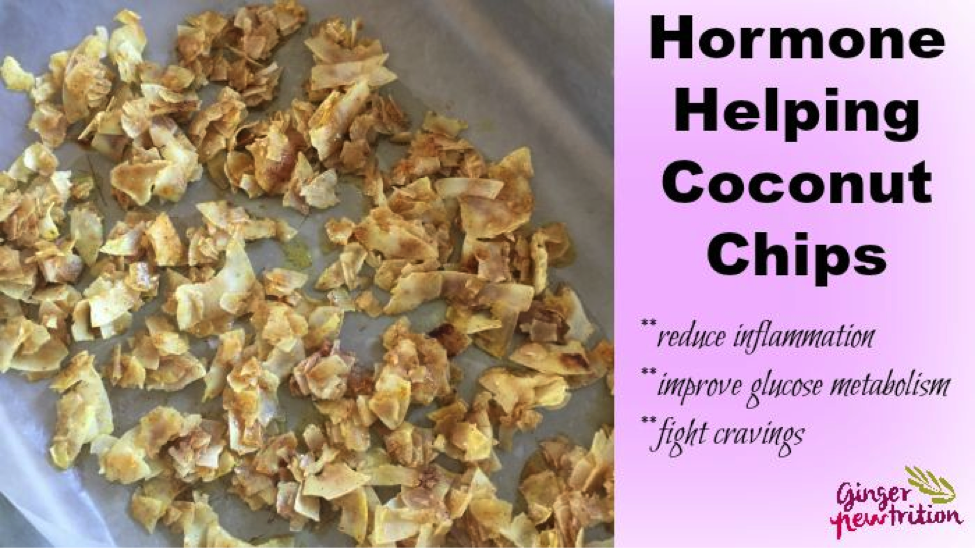
    Hormone Helping Coconut Chips


    As Alex of Dig Primal and I have been working on the content for our Healthy Hormones Group Program for the last few months, my favorite part of the process is that I get to learn the tips and tricks that she uses too! We all have different tools that we pick up along the way and I think that it is important to have a really varied toolbox for my clients. Each person that I work with is so uniquely different in their bio-individual and genetic makeup that often a suggestion that works amazingly for one person will leave another feeling sick. A supplement that gives me energy though the roof might cause you to fall asleep at your desk. That is all a part of the puzzle!! I love learning lots of different options, recipes and suggestions so that we can find the perfect combination for each person.


    Alex shared this recipe with me for Hormone Helping Coconut Chips and I can’t get enough! I love incorporating coconut flakes into my diet for a lot of reasons. For one, they have an amazing composition of healthy fats, protein, and fiber. Not only does this combination of macronutrients help keep you full longer after meals (which also helps prevent unhealthy snacking you weren’t actually intending), but fueling your body with such balanced caloric intake is great for the hormonal system. Additionally, the fatty acids found in coconut products directly play a role in healthy hormone synthesis so their presence in the diet greatly increases the success of all your other hormone-helping interventions; after all, it makes sense that if you don’t have the building blocks to create hormones, no amount of adjunctive therapies are going to help your cause in the long term.


    The spices found in this recipe work through a variety of mechanisms to help the endocrine and adrenal system along. Since glucose metabolism is a huge problem in people with hypothalamic-pituitary-adrenal dysfunction (which is often simply referred to as “adrenal fatigue” but is actually an incredibly limited way to look at the problem since it encompasses so much more than the adrenals…no wonder people have a hard time treating it on their own!), the cayenne, turmeric, and cinnamon are in here to help with the proper use and balance of sugar in the body.


    As an added bonus, cayenne pepper and turmeric are incredibly effective in tempering the inflammatory response in the body due to stress, high glucose levels, and underlying hormonal imbalances (see how they all work off each other??), incorporating these spices into meals regularly can be really helpful.


    Ingredients:


    • 2 cups coconut flakes
    • ¼ teaspoon cayenne pepper
    • ¼ teaspoon ground turmeric
    • ½ teaspoon ground cinnamon
    • ½ teaspoon vanilla extract
    • 1 tablespoon ghee (replace with coconut oil if you can’t tolerate dairy products)
    • 5 tablespoons raw honey


    Steps:


    1. Preheat your oven to 300 degrees.
    2. Place your coconut flakes into a medium-sized mixing bowl.
    3. Add in the cayenne pepper, ground turmeric, and ground cinnamon to the coconut flakes and stir well so that all the spices are well distributed (trust me when I say that you do not want a big bite of cayenne pepper down the line).
    4. Place the tablespoon of ghee (or coconut oil) into a small bowl and microwave it until the ghee has melted.
    5. Add the honey and vanilla extract to your melted ghee and mix them all together.
    6. Slowly pour your honey, ghee, and vanilla extract mixture of the spice-dusted coconut flakes. Mix it all together until everything is evenly distributed.
    7. Line a baking sheet with wax paper and evenly spread your coconut flake mixture over the entire area. You don’t want big clumps so take a few moments to spread it all out over the entire baking sheet.
    8. Bake in the oven for 5-7 minutes.
    9. Take out and let cool.
    10. I stored mine in a glass tupperware container.


    Want to learn more fun and delicious recipes that can also help support your adrenal glands and balance hormone? The Healthy Hormones Group Program is starting Sept 15th!!!


    [image url=”http://gingernewtrition.com/wp-content/uploads/2015/08/Healthy-Hormones-Group-Program-Logo.png” raw=”true” alignment=”center” margin_left=”0″ margin_right=”0″ margin_top=”0″ margin_bottom=”0″ width=”244″ height=”103″]


  • Why Adrenal Fatigue is not just about the Adrenals

    Why Adrenal Fatigue is not just about the Adrenals


    When Hayley of Primal Palate recently posted a picture of her Adrenal Cocktail on Instagram a flurry of requests came to my inbox. What is this drink? Should I try this? What else can I do for adrenal fatigue? The popularity of such a post magnifies how real the struggle and how far reaching. I created this blog post as a guest post on Primal Palate but wanted to share here as well!


    [image url=”http://gingernewtrition.com/wp-content/uploads/2015/07/untitled-7758-800×533-300×200.jpg” raw=”true” alignment=”left” margin_left=”0″ margin_right=”20″ margin_top=”5″ margin_bottom=”5″ link=”http://www.primalpalate.com/paleo-blog/my-take-on-adrenal-fatigue-from-a-recovered-burnout-guest-post-by-megan-rand-of-ginger-newtrition/” target=”_parent” width=”300″ height=”200″]

    I know the struggle is real from first hand experience. I have been there. When I first tested my adrenal function, I was in was in the worst phase of adrenal dysfunction. My daily cortisol output had tanked to nearly nothing and my sex hormones were depleted as well. I know what it is like to have a 1 year old and feel like you don’t think you can muster up enough energy to brush your teeth!


    Let’s talk a little bit about the term adrenal fatigue.


    I was taught to use the term adrenal or hormonal dysfunction, since the idea of adrenal fatigue makes it sound like the adrenal glands are actually tired. In most cases the adrenal glands are not tired at all, but they just might not be receiving the correct message. Here is an analogy. The adrenal gland is a teenager sitting on the couch watching TV. The reason that the teenager is sedentary could possibly be because he is fatigued, but more likely than not, that is not the case at all. He just hasn’t received the message “ Hey, get up and get outside it is beautiful out there!”


    This is also what happens in our body, we have many complex systems, one of them being the Hypothalamus-Pituitary-Adrenal (HPA) axis. The hypothalamus (in the brain) is supposed to tell the pituitary to alert the adrenals that it is time to make cortisol (or other stress mediators). It is like they are a bunch of 6 year olds playing telephone and sometimes there is s a breakdown in the chain. The adrenals may not end up getting the message or get the wrong message. You want a hot cross bun? No, I said I want to go for a RUN!


    Seems crazy that a game of telephone in the body could be regulating all the crucial tasks of digestion, energy, sex drive and immune function, but it is true. In our high stress world the inputs are coming into the hypothalamus at rapid speed, all while environmental toxics and endocrine disruptors and pumping through the body just to add a few more obstacles. It is not surprising that the signals get crossed.


    So what happens when the signals get crossed? Well, a whole slew of symptoms can occur. You can read the list of signs & symptoms here.


    Why I was excited to find out that I had severe adrenal dysfunction?


    Seeing my functional lab work that showed I was barely producing any cortisol, very little estrogen, progesterone and melatonin was the first time that my results on paper lined up with my symptoms. Up until this point, I had been to multiple doctors complaining of my vague but annoying symptoms. I was tired all the time, lightheaded, constantly sick and just basically miserable.


    My first relief upon seeing my lab work was soon followed by more questions.   I realized that although I had found an imbalance and yes it was causing these symptoms, I still didn’t know why I had imbalances.


    Maybe you suspect adrenal dysfunction, or even better if you have done a salivary cortisol and hormone test and know that you are either producing way too much cortisol (tired and wired) or have ended up in a state of low cortisol (downright exhausted). Or maybe your test showed that you have an inappropriate level (high or low) of hormones such as estrogen, progesterone and testosterone. What’s next?


    What to do if you suspect Adrenal Dysfunction


    • Check the numbers – I am a girl who likes to see my progress on paper and have the data and numbers to work with. The Biohealth 205 Adrenal/Cortisol panel is going to be a part of the Group Adrenal Program that Alex of Dig Primal and I will be offering in the Fall. This is an opportunity to see your hormone levels and then learn how to correct any imbalances found. Otherwise you can visit a Functional Medicine Doctor, Naturopath or Functional Diagnostic Nutrition Practitioner to get a salivary cortisol and hormone panel or another good option is a urine test (DUTCH). Choose a lab that includes cortisol, DHEA, progesterone, estradiol, estriol, testosterone and melatonin.


    • Start with the basics – I think we often (myself included) really want to find that one genetic defect that is the root of all of our misery. We look around and see the neighbors chowing down on McDonalds and they seem to feel great. We work hard to stay away from toxins, follow a strict paleo diet and eat 3 cups of greens a day. It just doesn’t seem fair that we still have health problems, so there must be ONE THING that we are missing. Although genetics of course play a role, don’t bother going down that rabbit hole until you have covered all of the basics.


    Do you have good Stress Management techniques? Are you getting adequate sleep, ideally going to bed a couple of hours before midnight? Are you hydrated and is your water from a good source (void of the metals, bacteria & fluoride but still has the minerals that your body is craving?) Are you exercising enough or are you over training?


    • Don’t stop at the adrenals – yes adaptogenic herbs and licorice root tea might be helpful, but use these tools to get some relief and then you can dig deeper to really correct and restore the imbalance from the root cause. You can read more about the steps I take with my clients in this


     Find your food sensitivities – Undiagnosed food allergies or sensitivities can raise cortisol histamine levels in the body, thereby taxing the endocrine system. Be a detective and make sure you are aware of your allergies and intolerances. Join the group detox program if you need help following an elimination program.

    Gut dysfunction – Just as Hippocrates said “all disease begins in the gut”. Whether you have traditional digestive symptoms or not, this is still an area of utmost importance to explore on your journey to balanced hormones. Just think about the dysfunction that will occur in the body if you are not able to absorb or assimilate the food that you are eating and therefore cannot turn those building blocks into hormones?

    Liver health – Often we need to cleanse the liver in order to get hormones working again. The liver has over 500 jobs, and keeping the hormones happy is one of them.

    Thyroid health – This is a great place to start with your physician and another important piece of the puzzle.

    Heavy metals – Do you have a mouthful of metal fillings? Heavy metals toxicity is one of the known causes of intestinal permeability (leaky gut) and also puts a burden on the liver.

    Parasite, bacteria, fungus – Make sure to look for possible pathogenic infections that may be depleting your nutrients, taxing you liver or raising your cortisol.


    So What Can I Do?


    I love to use food as medicine as much as possible to help balance hormones. While we make an effort to minimize the stress in our life, we can also help support our body with the best nutrients available.


    5 Tips for Healthy Hormones

    [image url=”http://gingernewtrition.com/wp-content/uploads/2015/06/Ginger-Newtrition-Good-Fats-300×209.jpg” raw=”true” alignment=”left” margin_left=”0″ margin_right=”10″ margin_top=”0″ margin_bottom=”0″ width=”300″ height=”209″]

    • Eat lots of good fat – We need dietary fats in order to make hormones! Make sure each meal has a healthy fat such as avocado, fish, nuts, coconut oil, avocado oil, olive oil, grass-fed butter (if you tolerate dairy), ghee (clarified butter), duck fat and tallow for ex.


    • Add some salt; Pink Himalayan Sea Salt – I put this on everything. Himalayan pink salt has 84 essential minerals that the adrenals need to function properly (very different from iodized table salt which can be harmful). You can even try sprinkling some in your water to see if it tastes better!


    • Don’t forget your Vitamin C – Healthy adrenal function requires vitamin C. Tissues in the body use more vitamin C during times of stress. Vitamin C is found naturally in a lot of foods such as citrus fruits, leafy greens, tomatoes, sprouts, kiwi, papaya, red pepper, and cauliflower. One teaspoon of Camu Camu powder added to a smoothie has the same amount of vitamin C as eating 6 oranges, so this is a good option for those of us who really need a boost!

    [image url=”http://gingernewtrition.com/wp-content/uploads/2014/06/Ginger-Newtrition-Gut-Healing-Chicken-Bone-Broth-700×394.png” raw=”true” alignment=”left” margin_left=”0″ margin_right=”10″ margin_top=”0″ margin_bottom=”10″ width=”350″ height=”196″]

    • Daily Bone broth – You knew this on was coming right? Bone broth made from organic raw chicken or beef bones (all of the bones!) that is cooked over a 24-hour period helps with gut repair, has highly absorbable forms of calcium, magnesium, potassium, phosphorus and sulfur and is an easily digestible protein. I add a Tbsp. of coconut oil, Tbsp. of collagen and pink salt to my mug and this becomes the perfect food for someone with adrenal dysfunction to maximize the nutrients with minimum effort.


    • Be aware of magnesium deficiency – Magnesium deficiency is incredibly common, some studies estimate 75% of Americans are deficient. Magnesium is important for stable energy, so this small change alone can have a big impact on those who are deficient. One way to increase your magnesium intake is by adding 2-4 ounces of Magnesium oil or 1 cup Epsom salts to a bath and soak before bed. The same thing can be accomplished with a foot bath while you read a book or watch TV. It is a great way to help your body relax while you are also absorbing your way to feeling better!


    • Adrenal Cocktail – This Orange Juice creamsicle offers a boost in energy and helps regulate blood sugar. This is great for those of you who are feeling pretty depleted and have low cortisol levels.


     The most important change that I see clients make in order to restore hormonal balance is a mindset change. When you discover that your fast-paced lifestyle is depleting your vital reserve it is time to reconsider your priorities. What activities or people are recharging you and which of those are stealing all of your energy? Can anything be re-arranged in your schedule or life to minimize the things that are depleting you?


    I hope this helps!! I would love any feedback on what else has worked for you.


    NEXT GROUP PROGRAM STARTING SEPTEMBER !


    [image url=”http://gingernewtrition.com/wp-content/uploads/2015/06/Ginger-Newtrition-Group-Coaching-Program-860×344.png” raw=”true” alignment=”center” margin_left=”0″ margin_right=”0″ margin_top=”0″ margin_bottom=”0″ width=”860″ height=”344″]

    Want to look at your hormone and neurotransmitter labs and have a group for support? Alex of Dig Primal and I are going to be offering a 3 month group program starting September 15th. You will have receive a customized protocol but all of the coaching will be done in group. Put your name on the Adrenal Fatigue Group Program update list for more information.

  • Lemon Water Elixir

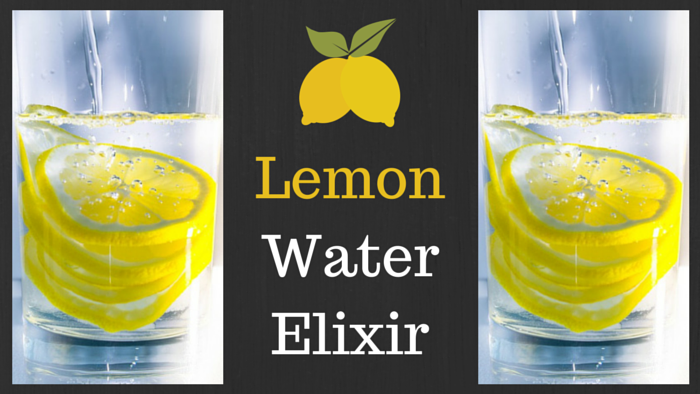
    Lemon Water Elixir


    Good morning!  Do you have any morning routines that you never miss?


    Well, for me it’s my morning lemon water. Although I don’t always drink it in the same form, I almost always have one. Sometimes it hot, sometimes it room temperature and sometimes it is a Lemon Water Elixir with apple cider vinegar.  I like to rotate the apple cider vinegar on and off, a couple weeks or a month on and then I take a break for a month.  I have just found that is what personally works best for me and if I continue to drink it every single day I get really sick of it.


    Why is this a good way to start your day?


    The elixir stimulates and wakes up your digestion, releases toxins from the liver, jumpstarts your digestive enzymes, and is loaded with vitamin C. What else could you ask for first thing in the morning?  This is a staple for the seasonal detoxes that I offer and sometime this change alone can provide drastic results.


    Lemon Water Elixir

    1 cup room temperature water

    Juice from 1 lemon

    1 teaspoon Bragg’s raw apple cider vinegar

    1 teaspoon honey (optional)

    1/4 in of fresh ginger root os 1/4 teaspoon ground ginger (I use Primal Palate spices because the quality and taste are amazing!)


    If you feel nauseous or experience tightness in the chest after drinking the morning lemon elixir, please omit the Bragg’s raw apple cider vinegar. This reaction can occur from the body’s releasing of bacteria and unwanted toxin. Continue to drink the lemon elixir, omitting the Bragg’s, for at least three days, and then try to re-introduce or use only ½ teaspoon of the apple cider vinegar. If the reactions continue upon reintroduction, continue to only drink the lemon water.  I have had this same reaction happen for clients just by adding lemon to their morning water so you might find that you need to start with a 1/4 lemon and work up if your liver is really struggling.


    Note: I have heard some dentists say that having apple cider vinegar daily can be damaging to the enamel on your teeth.  If you are going to be consistently consuming this beverage you might want to consider drinking this through a straw.  At our house we buy either glass or stainless steel reusable straws because who want to be sucking on cheap plastic? (Not to mention filling the landfills!)


    Cheers to a healthy liver!


  • The Benefits of Seasonal Cleansing

    The Benefits of Seasonal Cleansing


    It’s out with the old and in with the new for summer and the same should go for toxin build up in your body. Cleansing should occur at least once a year, but it is also suggested that as the seasons change, a good cleanse can better prepare us for the changes of the seasons. Just like the temperature, the foods we eat during each season changes. Going from spring to summer, the body is working up for some of the busiest months of the year.


    Traditionally, cultures all around the world have practiced seasonal cleansing in all types of different ways. Specifically for a liver cleanse, the liver is how the body takes toxins out of the body, and that is how the liver earns the spot of one of the hardest working organs in our bodies! The liver works with many other organs in our body to detox blood, produce bile, hormone breakdowns, and acts as a storage facility for our vitamins and minerals. If the liver is not functioning properly, it affects many other areas of our body.


    Some more important functions of the liver include removing old blood cells, helping the intestines process nutrients, chemical production for blood clotting, the breakdown and metabolizing of alcohol and consumed medications, and the production of necessary proteins and cholesterol.


    When people hear ‘liver disease’ they typically think of alcoholism, but that is not the only cause of liver disease or liver failure. Some other risk factors associated with liver disease include low potassium levels, drug use, exposure to certain chemicals, obesity, processed foods, viral infections and autoimmune diseases.


    Some things you may notice if your liver is not performing at its best include gas or bloating, constipation, heartburn, acid reflux, yellowish tint to skin and eyes, high blood pressure, difficulty losing weight, cognitive difficulties, dark urine, chronic fatigue, poor appetite, and chronic fatigue.


    If you want to support your liver there are certain foods you should focus on. These foods include beets, carrots, tomatoes, grapefruit, spinach, citrus fruits, cabbage, turmeric, walnuts, avocados, apples, brussels sprouts, garlic, dandelion root, leafy green vegetables, broccoli, cauliflower, asparagus, green tea, artichoke, olive oil, and alternative grains like quinoa, millet and buckwheat.


    There are many diets, supplements, and programs available to detox; you need to find the one that is best for you. Consult your doctor if you have concerns or questions. Below are some general tips that have worked for me:


    • Hydrate!
    • Eliminate common food sensitivities
    • Eat clean and organic
    • Exercise regularly
    • Eat a diet high in fiber
    • Take a probiotic
    • Eat light meals more frequently
    • Get the proper amount of sleep
    • Avoid alcohol and tobacco products
    • Avoid processed foods and whole grains


    You will find that when you are done with your detox, you should notice that you have much more energy, your digestion has improved, and your skin looks younger and brighter. You will also have better mental clarity and cognitive functioning, along with a boost to your immune system and more balanced blood sugar levels.


    Interesting in removing toxins naturally? If you’d like to shed unwanted weight than join us for the next Seasonal Detox!


    Health Hormones Group Program starts September 15th (some spots available now)


    If you have been considering joining our Healthy Hormones Group Program starting September 15th, I highly suggest that you start with the seasonal detox.  My clients who have focused on their detoxification pathways and liver health for a month or two before trying to balance hormones and support adrenals have been much more successful.  One of the liver’s many jobs is to get rid of excess hormones, so this is an important player in the balancing process.


  • My Favorite Life Hacks

    My Favorite Life Hacks


    There is one thing that I am more obsessed with than health and nutrition. I bet you didn’t think that was possible! Although I have a health blog and am always talking about nutrients, hormones and functional lab work, I absolutely love to research life hacking.


    My definition of life hacking is finding the most stress-free and streamlined process for everything that you do during the day. What’s makes you feel the best and operate the most smoothly? What allows you to produce specific focused results without entering a state of stress? What helps you have the time left over in the day to be with the people that you love or take time to refuel with a good book or a jog.


    When I work with busy moms, one of the most life and health changing concepts (once actually taken to heart and put into action) is scheduling time for themselves first. It is easy to end up last on the list and sometime this is even worn as a badge for the good mom award.


    The problem is that, as the stewardess will gladly remind you, if you don’t put the air mask on yourself first you aren’t going to be much help to your children. A hormonally imbalanced, overtired mom who is constantly battling the kid’s latest cold is not going to be able to bring their best self to their family, their job or their passion.


    Here are some of my favorite life hacks.


    Schedule time for yourself: I schedule everything that is important to my health. I schedule my exercise first. Having an appointment with a trainer also adds the accountability factor. I schedule time for grocery shopping, time for meal prep and time for cooking. I also schedule time with my family and friends. My hours to work are 9-4 (with the occasional evening call or webinar) and then I am done. I even schedule time for social media, time for clients and time for working on bigger projects that require a block of time to focus.


    Technology Blackout: When you are working on a project, turn off your phone or put it in airplane mode. Turn off the ding that notifies you that you have a new friend or a new comment. Pick a time (that is on your schedule!) to use social media or surf the web and give yourself a limit. After that, remove yourself from the addictive drip of social media.


    Multitasking: Don’t do it. Enough said. You don’t know how excited I was to finally be reading books and research about how much time we lose in the process of switching from one task to another. I have never been a good multi-tasker and had always seen it as a flaw but now I have a different view.  In The One Thing by Gary Keller (I highly suggest this book if you haven’t read it!) he says that “multitasking is a lie”. He later goes on to explain how we think that we are doing two things at once but that our brain is actually bouncing back and forth between the tasks, “people can actually do two or more things at once, such as walk and talk or chew gum and read a map; but, like computers, what we can’t do is focus on two things at once.  Our attention bounces back and forth.”  And as Steve Uzzell says “multitasking is merely the opportunity to screw up more than one thing at a time.”


    Batching: Batch activities together that are similar and do them all at once. If you get emails that you need to answer every 20 minutes save them until the end of the day and answer them all at once. This also applies in relation to food and cooking. When you return from the grocery store, try washing and preparing your vegetables all at once before you put them away. Cook double or triple batches of staples in your house and then keep some in the freezer to easily pull out in a pinch.


    Streamlining & Upgrading: I have to thank my old supervisor (well he isn’t actually old at all but you know what I mean) for insisting on constantly improving the process flow of our design work. We were required to take 10-15 minutes at the end of each project to upgrade something for the next time. We used an excel spreadsheet and checklists so that if one engineer made a mistake or learned a lesson we would be sure to pass that knowledge onto the others. When you find yourself doing something more than once it is time to look for a system. How many times have you sent a similar email or make the same grocery list? Create a template that you can pull from and update or personalize as needed.


    Everyday I am changing my workflow to see what is most efficient. It is a never-ending process of upgrading and tweaking that I really enjoy. Finding your flow will leave you energized at the end of your day or project instead of depleted. When we feel unorganized and pulled in many directions we are living in a state of dis-ease.


    I would love to hear what tools and strategies that you have found work best. Please share them in the comment section!

  • Tongue Scraping and Clues to Health

    Tongue Scraping and Clues to Health


    Today I have my first guest post on my blog by Alex, founder of Dig Primal. I love Alex’s take of health because she has an amazingly detailed understanding of the body since she is anesthesiologist in training, but also has a passion for looking at health from a holistic standpoint.  By combining her traditional medical training with her own journey to find the root of her chronic health conditions she has the tools to help others really find optimal health. I participated in her Nutrient Bootcamp last month and I LOVE the concept.  We focused on adding in a certain number of diverse nutrients per day instead of focusing on what we couldn’t have.


    [image url=”http://gingernewtrition.com/wp-content/uploads/2015/05/Untitled-design-2-860×645.png” raw=”true” alignment=”center” margin_left=”0″ margin_right=”0″ margin_top=”0″ margin_bottom=”0″ width=”860″ height=”645″]


    Check out today’s guest blog post by Alex —>


    ————————————————————————–


    I got a tongue scraper a while back and I was super excited to use it, but it hasn’t been that satisfying.


    How come? I’ll explain that in a minute.


    First, I want to talk about why tongue scraping matters.  You can just use a brush, right?  Meh, I guess you can theoretically,  but it’s kind of like using paper towel to push the dirt around on your floors when a good old-fashion mop and pail clean so much better.


    What’s the idea behind tongue scraping?  The tongue is another source of toxin removal from the body.  Although this is not commonly discussed, your tongue is simply a part of the digestive tract. As we know, our digestive tract functions to collect and expel waste from the body.  In addition to toxins, the tongue collects food debris, bacteria, and the byproducts of metabolism. (A collective “ew” on the count of 3?)  Whether it’s our gut, kidneys, our armpits, or our feet, our bodies have ingenious ways of collecting expelled waste and getting rid of it in a safe way. The tongue is simply one of the venues.


    The problem with the tongue is that in order to rid the body of the toxins that it has collected, often these toxins are re-swallowed in hopes that the gut and liver will get rid of it.  In an ideal world, we would have a minimal toxic load entering the body and a robust GI tract that would make this process smooth like butter…but let’s face it, that’s not most of us.


    [image url=”http://gingernewtrition.com/wp-content/uploads/2015/05/tongue-scraper-10838269_10204285838719070_3412098698392233971_o-300×201.jpg” raw=”true” alignment=”left” margin_left=”0″ margin_right=”10″ margin_top=”0″ margin_bottom=”10″ width=”300″ height=”201″]

    I’ve recently become some a huge fan of tongue scraping because it is an easy resource to help your body function optimally.  It is a metal or plastic object that costs about $6 on average, takes up virtually no room in your bathroom, and is widely available.


    As a bonus, when you’re talking about removing toxins, fighting bad breath (halitosis is one of my top 10 favorite medical words), and promoting good gum and dental health, using a tongue scraper for 1 minute a day seems like a pretty high-yield thing to do for your health.


    But this post is about more than just tongue scraping and really about how we can become an amazing health detective by learning to watch for changes and signs.


    The very helpful, albeit sometimes frustrating, thing about the body is that no processes are ever without signs.  There is almost always something visible that manifests when an inward process is happening.  If we are paying enough attention we can use that information to intervene and make a difference in our health. The downside to these clues is that it takes effort.  It is so much “easier” to wait until we develop overt diseases and try to band aide a solution together later (of course, this rarely works).


    There are many ways that our body can clue us into what is going on inside the body.  A lot of the long-term manifestations are ones that we talk about all the time, things like fatigue, changes in bowel habits, acne, sugar cravings, etc.


    What I wanted to touch upon today are the changes in our bodies that we can observe in the short-term.  It’s like getting a quick snapshot into our health right now.


    Turns out, our mouths can be a really good source of quick feedback. (Of course, our mouths can tell us a lot in the long term as well as evidenced by the links between gum disease, dental carries, and cardiovascular disease…but that’s for another post.)


    [image url=”http://gingernewtrition.com/wp-content/uploads/2015/05/Tonuge-Scraping-and-Clues-to-Health-2.jpg” raw=”true” alignment=”center” margin_left=”0″ margin_right=”0″ margin_top=”0″ margin_bottom=”0″ width=”744″ height=”438″]


    Here are My Top 4 Oral Cues to Monitor for Your Health:


    1.) Tongue Coating. First, and in the context of talking about tongue scraping, it makes sense that we address the coating on our tongue.  Traditional Chinese Medicine focuses on this quite heavily (this is a particularly comprehensive article on the subject).


    I tend to break it down much more simply: is a coating there or not?


    I’ve noticed that when I’m in a healthy state, the coating on my tongue goes (or nearly goes) away. This is why I said above that tongue scraping has been a bit unsatisfying lately. My efforts with maintaining major nutrient support through Nutrient Boot Camp, detoxing, maintaining good gut health, and managing stress levels have all been been paying off.


    On the other hand if I get exposure to a little bit of gluten at a restaurant, get majorly stressed out at work, or skimp on sleep a couple nights and drink too much coffee to compensate, my tongue always shows me that something is going on. Since I use my tongue scraper every day, regardless of what my tongue is doing, I’m forced to pay attention to what that coating is telling me.


    2) Check Your Tongue Veins. Next, I’ll check out under the hood of the car, so to speak. There are two big veins that run along the underside of the tongue that can often become swollen when there is an acute process happening.  It can mean a myriad of things but traditionally, the engorgement of the veins has been viewed as a sign that the liver isn’t functioning optimally.  Personally, I have found this to be true and I use it as a barometer for my general detoxing efforts.  (Next time you choose to imbibe, if enjoying a few drinks is your thing, check out under your tongue the next morning and see what you find.)


    I have also found that allergen exposure in my food will trigger this effect.  This is extra helpful because since I get both acute and delayed reactions from certain foods, checking out under my tongue is a quick way to see that something I’ve recently eaten is bothering me.


    3) Tongue Swelling.  This is a less common sign but can still be a good tool to keep in your arsenal.  I check this when I’m tongue scraping so it really isn’t any more work to keep it on my radar.  I’ll notice that my tongue gets swollen because I can see the indentation of my teeth along the edges.


    For me, this is usually a sign of stress. Now, most of us know when we’re stressed…but it’s so easy to lie to yourself and ignore what’s going on. A physical manifestation can be a kick in the pants reminder that the stress you’re pretending to ignore is not going unnoticed by your body.  Even if the stressor can’t be removed, a good session of troubleshooting about how I’m dealing with the problem(s) goes a long way for me.


    4) Cracks in the corner of the mouth. Lastly, cracks in the lips and corners of the mouth can be a marker of internal health.  For some, this can be a long-term manifestation but I’ve found that when I’m having a problem with malabsorption of nutrients (example: if I had a gluten exposure and it killed off a whole bunch of my intestinal villi), my lips definitely let me know pretty quickly.  When I see this, I jump wholeheartedly into my go-to gut healing protocol, complete with tons of homemade bone broth, l-glutamine, gelatin and probiotics.

    ————————————————————————–
    Let me make clear that this list is just a few signs that that our oral health can show us about our current state.  You may have some, all, or none of the above signs…but it is my hope that by thinking through some of the thing that I’ve noticed for myself, you can begin to pay attention to what your body is signaling to you and use it to improve your health overall.
     

  • The Adrenal Cocktail Creamsicle

    The Adrenal Cocktail Creamsicle


    Adrenal dysfunction is a very popular topic right now.

    I have recently been working with Hayley at Primal Palate to support her on her health journey (you can read about that here). We are making small upgrades and tweaks in her life to try to support her adrenal health and hormone balance and one of the additions to her life is a daily Adrenal Cocktail.

    [image url=”http://gingernewtrition.com/wp-content/uploads/2015/04/Screen-Shot-2015-04-07-at-2.24.39-PM-300×300.png” raw=”true” alignment=”right” margin_left=”5″ margin_right=”0″ margin_top=”0″ margin_bottom=”0″ width=”300″ height=”300″]
    When she posted a picture of her Adrenal Cocktail on Instagram it spread like wildfire. It has affectionately been named the “dreamsicle” and the instagram community has already started upgrading the recipe by adding carrot, tangerine or ginger to the juice as well! The Feisty Kitchen even used her fabulous photography skills to make this look like the most appetizing drink there is!

    Here is a little bit of background about this recipe.

    I learned about the Adrenal Cocktail from my mentor Christa at The Whole Journey. Her recipe is a slightly modified version of the traditional Adrenal Cocktail (the original recipe is orange juice, cream or tarter & Himalayan pink salt).

    When I was in the depleted phase of adrenal dysfunction, this dreamsicle saved me! I drank the Adrenal Cocktail every morning for about a month while I was balancing my hormones. The most notable difference was my energy and the ability to finally regulate my blood sugar. I found that I wasn’t crashing mid afternoon, craving sugar or getting light-headed as much as I used to.

    Adrenal Cocktail recipe:

    • 4-6 oz OJ (fresh squeezed or cold pressed like Evolution brand)
    • 2 Tbsp raw cream (or coconut cream)
    • 1 Tbsp Collagen
    • Himalayan pink salt as much as you can stand

    Blend it up into a delicious creamsicle and drink 1-2 times a day an hour before or after food.

    Benefits of the Adrenal Cocktail: 

    • Fresh squeezed OJ gives liver the glucose it needs to regenerate
    • Perfect balance of fat/carb/protein ratio for adrenal health and blood sugar balancing
    • Collagen is loaded with the amino acids and building blocks for health
    • Himalayan pink salt has 84 essential minerals that the adrenals need to function properly (very different from iodized table salt which can be harmful)

    This might not be for everyone.

    You always need to consider your personal situation when implementing a dietary or lifestyle change. I have had clients try the cocktail and feel horrible because of an issue with bacterial overgrowth!!

    What else can I do?

    Drinking a daily creamsicle is just one of the many life changes that I made and by no means a quick fix for your adrenal glands. You can find some other steps to start taking here.

    If you have been “diagnosed” with Adrenal Dysfunction (often called adrenal fatigue) don’t stop there.  Start digging for the root cause.  What caused the imbalance?

    Adrenal Dysfunction is an imbalance of hormones.  The problem is very rarely actually the adrenal gland itself, but instead there can be a breakdown anywhere in a complex relationship between the Hypothalamus Pituitary Adrenal (HPA) axis.  Anything that helps “restore the adrenals” is really just a way of helping to balance hormones and blood sugar, and therefore puts let stress on the thyroid, detoxification and every other function in the body.

    In the meantime, while you are doing the deeper work, you can replenish your body with this cocktail.

    Cheers!


    Do you feel like you need a group for guidance and support on your Adrenal balancing journey?


    The Healthy Hormones Group Program starts September 15th!!


    This 12 week program will get you access to the hormone and neurotransmitter labs and a customized protocol.  With biweekly videos, emails & support in your inbox we will go step by step through how to support your adrenals and balance your hormones.


    [image url=”http://gingernewtrition.com/wp-content/uploads/2015/06/Ginger-Newtrition-Group-Coaching-Program.png” raw=”true” alignment=”center” margin_left=”0″ margin_right=”0″ margin_top=”0″ margin_bottom=”0″ link=”http://gingernewtrition.com/work-with-me/” target=”_parent” width=”900″ height=”360″]


    Photo credit: The Feisty Kitchen – check her out for her fabulous recipes!!

  • Top 10 Reasons Why My Dad is a Health Rockstar at Almost 70 Years old

    Top 10 Reasons Why My Dad is a Health Rockstar at Almost 70 Years old


    My dad, Steve Rand, is about to turn 70 next month but you would never guess it. On a recent visit to NH I had an interesting encounter with a family friend. She asked “What has your dad been doing in the last 6-9 months? He looks and acts 10 years younger. I want to know what tricks he has up his sleeve.”


    What changes has he made lately?


    We started off the summer with a so-called “cross-country cleanse” when he joined me and my 3 yr old on a drive from Arizona to Chicago. This involved a drastic cutback on his coffee intake, no gluten, and a lot of ginger green juice. He ended the summer following the official Ginger Newtrition 15 day elimination plan, finding exactly what foods do and do not work for him.


    Is it his diet that makes him so healthy? Nope.


    As much as I would love to take credit, the truth of the matter is that the lemon water, coconut oil and green smoothies are really only a small piece of the puzzle. Here are the real reasons that my dad is such a healthy guy at 70 years old.


    1) Exercise. When my dad turned 67 he ran his first 10K and now runs consistently 3-4 times a week. When he is not running, he is golfing, hiking or swimming. Finding movement that you love helps maintain a healthy weight, regulate your sleep and gives you some extra endorphins to boost your mood.


    [image url=”http://gingernewtrition.com/wp-content/uploads/2014/09/Ginger-Newtrition-babysitting-Lily-219×300.jpg” raw=”true” alignment=”left” margin_left=”0″ margin_right=”8″ margin_top=”0″ margin_bottom=”0″ width=”219″ height=”300″]2) The Power Nap. Want to have enough energy to take on a new project mid afternoon? 20 minutes is all it takes. The trick is to sit upright in a chair so that you aren’t too comfortable, otherwise you might enter deep sleep and end up feeling groggy.


    3) Community & Volunteering. Recent research shows a strong correlation between volunteering and health: those who volunteer have lower mortality rates, greater functional ability, and lower rates of depression later in life than those who do not volunteer. My dad is so involved in the local community that some people like to call him the Mayor of Plymouth. He is always working on a new project in town, from the local Rotary, Historical Society, Christmas Parade to raising money for the Youth Center.   I believe, that the strong connection he has to his town and many organizations is the biggest secret to his health.


    4) Master of the Tuck and Roll. Being able to fall and not hurt yourself is an important strategy in my dad’s long term health.


    5) Laughs a lot. Like father, like daughter. Laughter is fun and infectious but also has deep health benefits such as relieving stress, boosting the immune system and increasing blood flow to help protect the heart.


    6) Tries New Things. Can’t teach an old dog new tricks? Not true here. At 67 my dad started running races and now at 70 he is taking up sculling. How many almost 70 year old men do you know are willing to try their daughter’s hippy new-age detox? Being flexible and adventurous in life keeps the brain active and you feeling and looking young.


    7) Eats the whole plant. My dad takes eating the whole plant to the next level. When eating an apple finishes the entire thing off, core and all! (note: I am not suggesting anyone start eating the whole apple!)


    8) Social Connection. I am not talking about Facebook. My dad has strong ties with many groups of very different types. Every other Monday you can find him hosting a men’s group at his house, discussing philosophy or religion, and on Sunday he is out bonding with his golfing buddies. Social capital is an important predictor in health and longevity, especially as we enter the senior age. Stay connected, in person.


    9) Laid Back Attitude. He is a go-with-the-flow kind of guy. Oops, we are driving the wrong way down a one-way street? He won’t let that mess with his mood or cortisol output. Since I routinely check my client’s cortisol levels, I can attest that being uptight and stressed out daily will lead to hormone imbalance and most likely chronic diseases.


    10) Family & Love. My dad has a lot of love for his family and his family has a lot of love for him. Having a partner that motivates him to stay healthy, try new things and just be the best that he can be keeps him young and happy daily.


    Bonus secret weapon? He had a ginger mother AND has a ginger for a daughter. Being surrounded with that much red-headed love has to be good for you!!


    What do you think is the biggest predictor of living a long and healthy life? We would love to hear your ideas!